All Categories
Featured

Adopting Drought-Resistant Landscaping in Los Angeles
Table of Contents
It is a regular site for continued trainee and faculty driven remediation projects. Check out the Sage Hill website for the most up to date information. UCLA trainees, personnel, and professors have actually partnered with The Bay Structure and countless volunteers to assist restore the community of the only natural creek on campus.
The once magnificent Stone Canyon Creek was previously a dominant feature of the UCLA campus. But for many years, as the school expanded, the creek was routed underground and now just this little segment runs behind the Anderson School of Management. Volunteers continue to get rid of invasive greenery, replant the location with native vegetation, and bring back the community.
You can discover more about Stone Canyon Creek Repair on this page. On the south of school, the Mildred E. Mathias Botanical Garden (MEMBG) is a living museum, having unique collections created to help the undergraduate teaching mission at UCLA and to augment the capability for research study on school.
This center uses its educational material to the campus community, homeowners of Los Angeles, and visitors from around the world to enhance discovering about plants and promote greater gratitude for relevance of plants to society. Not far from the arboretum, near the Court of Sciences is an area in between Franz Hall and Geology fondly called "Hummingbird Alley" or "Hummingbird Canyon.
Regional Maintenance Hub Standards for SoCal
She began feeding hummingbirds from her workplace and the population grew to a nest of 200 plus birds.
Likewise in the Santa Monica Mountains, the La Kretz Field Station is an unique, collaborative project in between the UCLA La Kretz Center and the National Forest Service. The location is ideal for assisting in trainees and visitors alike to work on collaborative conservation tasks in the Santa Monica Mountains and across Southern California.
The La Kretz Center for Preservation Science helps preserve California's biodiversity and environments through research, education and public programs. They supply the scientific research study required to inform management actions to secure and restore California's fragile biodiversity resources. In the Owens Valley, UCLA Handles the White Mountains Proving Ground, which consists of 4 research study stations situated along a 10,000-foot elevational gradient.
Future-Proofing SoCal Portfolio Landscapes Against Drought
Surrounded by semiarid scrubland and riparian woodland, it supplies a base for year-round research study in the area. Roughly 6,000 feet higher and 1.5 hours of driving time away are the log walls of Crooked Creek Station, sited amidst montane forest and sagebrush hills. Nearby grow two groves of bristlecone pine that consist of the earliest trees in the world.
Trending CitiesPhoenix, AZ Landscape DesignTucson, AZ Landscape DesignHuntington Beach, CA Landscape DesignLos Angeles, CA Landscape DesignMill Valley, CA Landscape DesignNapa Valley, CA Landscape DesignOakland, CA Landscape DesignPalo Alto, CA Landscape DesignSacramento, CA Landscape DesignSan Diego, CA Landscape DesignSan Jose, CA Landscape DesignSan Francisco, CA Landscape DesignThousand Oaks, CA Landscape DesignVentura, CA Landscape DesignAurora, CO Landscape DesignDenver, CO Landscape DesignLakewood, CO Landscape DesignBridgeport, CT Landscape DesignGreenwich, CT Landscape DesignNew Canaan, CT Landscape DesignStamford, CT Landscape DesignWashington, DC Landscape DesignMiami, FL Landscape DesignOrlando, FL Landscape DesignPalm Beach, FL Landscape DesignTampa, FL Landscape DesignWinter Park, FL Landscape DesignAtlanta, GA Landscape DesignRoswell, GA Landscape DesignTwin Falls, ID Landscape DesignJoliet, IL Landscape DesignBoston, MA Landscape DesignCambridge, MA Landscape DesignPotomac, MD Landscape DesignPortland, ME Landscape DesignSt.
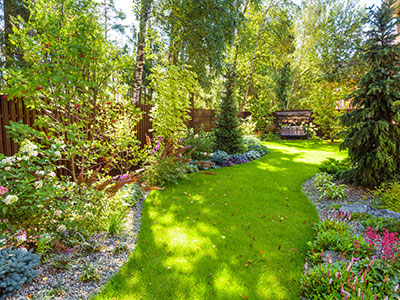
As part of its dedication to saving water, Caltech has actually transformed nearly a quarter of its school to drought-tolerant landscaping and set up systems to recover condensate from developing air-conditioning systems to refill showing pools. California native plants and other drought-tolerant plants cover 17 percent of campus, up from 4 percent in 2012.
Regional Service Center Standards in Southern California
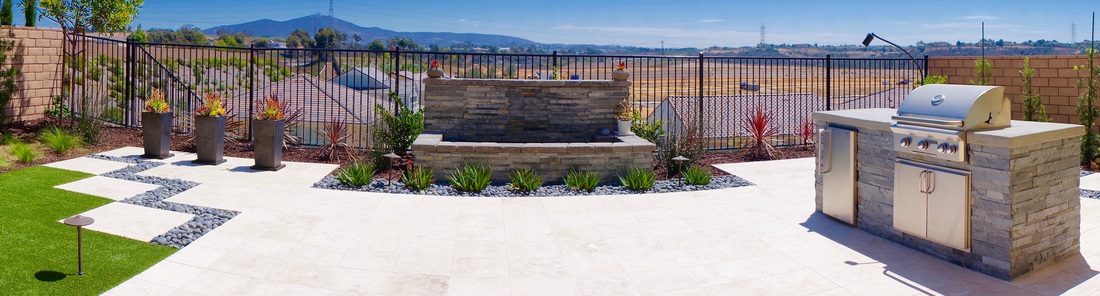
Every square foot of grass replaced conserves 20 gallons of water per year typically. As an outcome of these efforts, irrigation accounts for less than 10 percent of Caltech's water usage in a common year. While these landscaping efforts to decrease irrigation requirements would generally fix the majority of a water user's challenges, Caltech's water obstacles are more complicated.
That matters, provided that the utility plants represent about half of the water used on campus in a common year.
This site discusses how to develop and set up California friendly landscaping, watering approaches and devices that will assist you water your landscape more efficiently, and suggestions on how to easily and efficiently keep your garden. Please click Lawn to Garden for instances of gardens which contain design elements that are turf rebate eligible.
2004-2025 Jadene Mayla, All Rights Reserved.
Optimizing Irrigation Efficiency With California Landscape Updates
"Sustainable landscapes are responsive to the environment, re-generative, and can actively contribute to the advancement of healthy communities. - From the American Society of Landscape Architects WE CAN SIGNIFICANTLY LOWER YOUR LANDSCAPES WATER AND ENERGY USE, WHILE PRODUCING A MORE LUSH, BEAUTIFUL, AND ECOLOGICALLY SUSTAINABLE GARDEN SPACE FOR YOU AND YOUR FAMILY TO ENJOY!
We utilize only the most efficient water-saving and lighting technology in our designs that need just a portion of the water and energy that older systems use. CBL create habitat for local and migratory bird along with useful insect populations. We primarily utilizes natural fertilizers and mulches in our styles and starts non-toxic insect control programs for all our tasks.
Landscaper Map DirectionsIt is our mission to create outside areas that are gorgeous and dynamic, that require little water and energy, are healthy and delighted spaces for our clients to enjoy, and that also provide functional advantages to our regional environment.
Raptors (e.g. hawks, owls, falcons) are large, charming bird types at the top of the food chain. They experienced human-driven population crashes throughout the 19th and 20th centuries. While a subset of these species has recovered in the Los Angeles region, others have not and are intolerant of urbanization and other human activities.
Exceeding 2026 Sustainability Standards in Southern California
Nesting locations of raptors are likewise important signs of community health in metropolitan areas like the Los Angeles region. Numerous government firms, developers and not-for-profit companies gather data on urban-nesting raptors around the Los Angeles Basin, but these efforts are not well-coordinated. If this information can be combined, it will work to developing management tools like maps and databases that can assist guide regional policy and land-use choices.

Latest Posts
Maximizing Water Efficiency in California Climates

Local Maintenance Hub Standards in Southern California
Navigating 2026 ESG Benchmarks in SoCal